

DC Comics has stood at the forefront of the comic book industry for over eight decades, creating some of the most iconic superheroes in popular culture. From Superman and Batman to Wonder Woman and the Flash, the visual representation of these characters has undergone dramatic transformations. The art style of DC Comics is not merely a reflection of changing artistic tastes but also an indicator of broader cultural shifts, technological advancements, and storytelling evolution. Examining the progression from the Golden Age to the modern era reveals how DC has consistently adapted its visual identity while maintaining a recognizable and influential aesthetic.
The evolution of DC’s art style demonstrates a delicate balance between tradition and innovation. Artists have had to respond to changing audience expectations, advances in printing technology, and the desire to convey increasingly complex narratives. Over time, the artwork has shifted from simple, bold illustrations designed for clarity on cheap newsprint to highly detailed, nuanced visuals capable of conveying subtle emotion and dynamic action. Understanding this evolution provides insight into both the history of the comic medium and the ways in which visual storytelling has grown alongside American culture.
The Golden Age: Bold Lines and Heroic Simplicity
The Golden Age of DC Comics, roughly spanning the late 1930s to the early 1950s, laid the foundation for the visual language of superheroes. This era was marked by bold, straightforward illustrations that emphasized clarity, action, and easily recognizable character designs. Superman, introduced in 1938, exemplified this aesthetic: his square jaw, bright costume, and dynamic poses were designed to capture attention immediately on newsstands. Similarly, Batman, debuting in 1939, employed stark contrasts, with deep blacks and shadowed backgrounds that accentuated the character’s mysterious persona.
Artists of the Golden Age, including Joe Shuster, Bob Kane, and Jerry Robinson, worked within significant technological constraints. Printing technology at the time favored bold lines and solid colors, as subtle gradients and fine details often became lost on the cheap paper used for comic books. The emphasis on readability meant that characters were highly stylized, with exaggerated anatomy, clear facial expressions, and dramatic movement lines to convey action and emotion efficiently.

The simplicity of the Golden Age style was also reflective of its narrative approach. Stories were straightforward and morally clear, often involving heroes battling unmistakably villainous foes. The art mirrored this clarity, with little ambiguity in character motivation or plot development. Despite—or perhaps because of—these limitations, Golden Age art established visual templates for DC’s major characters that have endured in various forms to the present day. Iconic poses, costume designs, and even facial structures trace their roots back to this foundational era.
Additionally, the Golden Age encouraged experimentation within the limits of the medium. Artists began to explore how perspective, composition, and panel layout could heighten drama and engagement. Action sequences were often depicted in sequential panels with minimal overlap, emphasizing movement and momentum. Backgrounds were simplified to focus attention on the hero, though imaginative cityscapes and iconic settings began to emerge, particularly in Superman’s Metropolis and Batman’s Gotham City. This combination of simplicity and inventiveness became the hallmark of DC’s early visual identity.
The Silver Age: Streamlined Aesthetics and Cosmic Expansion
As the 1950s and 1960s unfolded, DC Comics entered what is now known as the Silver Age, a period of stylistic refinement and imaginative expansion. The post-war era brought a renewed interest in science fiction, fantasy, and futuristic storytelling, which significantly influenced the visual design of comics. Artists like Carmine Infantino, Gil Kane, and Curt Swan became central figures, refining character designs to appear more streamlined, dynamic, and expressive.
One of the defining features of Silver Age art was its emphasis on cleaner lines and smoother anatomy. Characters were often elongated with more realistic proportions than the exaggerated forms of the Golden Age. Faces conveyed a wider range of emotions, allowing for more nuanced storytelling. Panels were arranged with a greater sense of flow and rhythm, reflecting the growing sophistication of narrative techniques. The art was still bold and clear, suitable for newsstand reproduction, but it incorporated more fluid motion and imaginative settings, particularly in stories involving space travel, superpowers, and alternate dimensions.
The Silver Age also introduced a visual vocabulary that emphasized wonder and excitement. Cosmic energy, futuristic technology, and otherworldly landscapes were rendered with imaginative detail, reflecting the era’s fascination with the possibilities of science and the unknown. Characters like the Flash and Green Lantern showcased dynamic movement through innovative use of speed lines, energy effects, and vibrant color palettes. Colorists played a larger role during this period, experimenting with bright, contrasting tones to enhance the excitement of each page. This period cemented DC’s identity as a publisher of heroic adventures that combined human drama with extraordinary spectacle.
Beyond the technical advancements, the Silver Age reflected cultural optimism. The post-war boom and the Space Race inspired stories of progress, exploration, and moral clarity. Artistic styles mirrored this optimism: compositions were open and airy, characters moved with grace and purpose, and backgrounds often included imaginative, utopian visions of the future. Artists were tasked not only with illustrating action but with evoking a sense of possibility and grandeur that aligned with the era’s cultural narrative.
The Bronze Age: Emotional Depth and Social Awareness
The transition to the Bronze Age in the 1970s and early 1980s marked a significant shift in the artistic sensibilities of DC Comics. The medium matured alongside its audience, addressing more complex themes such as social injustice, personal struggle, and moral ambiguity. Artists like Neal Adams, Dick Giordano, and Jim Aparo introduced styles that combined realism with cinematic dynamism, emphasizing emotional depth alongside action.
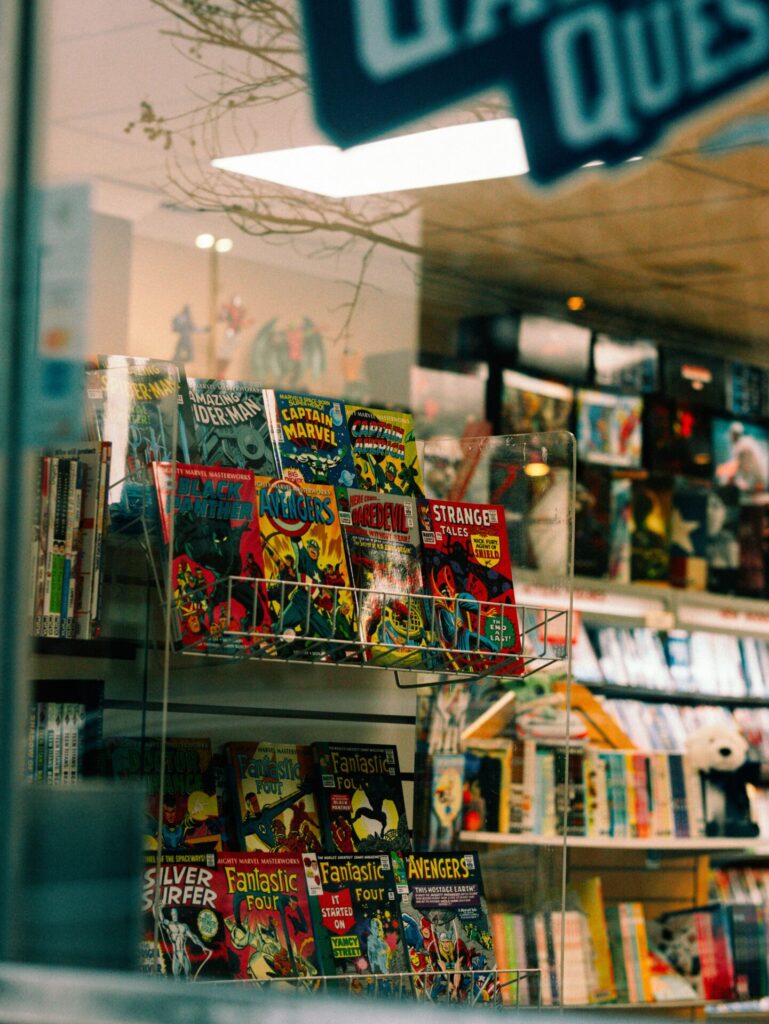
Bronze Age art became more detailed and expressive, with greater attention to human anatomy, facial expression, and atmospheric effects. Characters were no longer simply heroic symbols; they were complex individuals navigating morally challenging situations. Artists used shading, cross-hatching, and more intricate backgrounds to convey mood and tone, reflecting the evolving sophistication of storytelling. Darker, grittier settings, particularly in Batman stories, reinforced the thematic depth of the narratives, signaling a move toward realism and psychological complexity.
Color palettes shifted during this period to reflect narrative tone. Earthier hues, subdued backgrounds, and strategic use of contrast created atmosphere and emphasized dramatic moments. The Bronze Age reflected not only artistic innovation but also a growing desire to address contemporary social issues through visual storytelling. Comics became a medium capable of blending spectacle with introspection, and DC’s art evolved to meet these narrative ambitions. The Bronze Age solidified the concept that comic art could be both visually compelling and emotionally resonant.
The Modern Era: Cinematic Realism and Digital Innovation
From the late 1980s to the present day, DC Comics has entered an era defined by cinematic realism and digital innovation. Modern artists like Jim Lee, Alex Ross, and Brian Bolland have pushed the boundaries of what comic book art can achieve, blending hyper-realistic rendering with dynamic, filmic storytelling techniques. Advances in digital technology, printing quality, and color reproduction have expanded the artistic toolkit, enabling unprecedented detail, texture, and depth.
Storytelling sophistication has also influenced art style. Graphic novels, crossover events, and limited series often feature elaborate page layouts, full-bleed illustrations, and innovative panel structures that emphasize narrative pacing and dramatic impact. Artists are tasked not only with illustrating action but with conveying emotion, mood, and thematic nuance. Character designs reflect both legacy and evolution, maintaining iconic elements while adapting to contemporary tastes and cultural sensibilities.
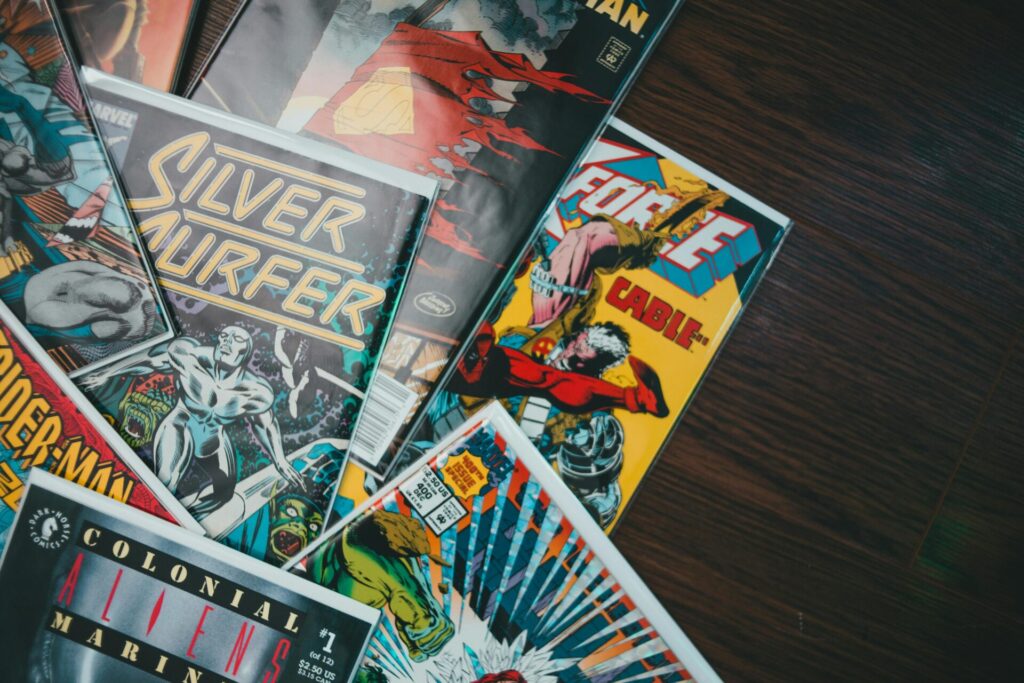
The modern era also embraces diversity in artistic approach. While some works prioritize hyper-realism, others experiment with stylization, abstraction, or homage to earlier periods. Digital tools allow artists to seamlessly integrate traditional pencil-and-ink techniques with modern effects, resulting in a fusion of past and present aesthetics. This flexibility ensures that DC Comics remains visually relevant while honoring its rich artistic heritage.
Furthermore, contemporary art often incorporates visual cues tied to cinematic adaptations, reflecting the symbiotic relationship between comics, film, and television. Artists consider how characters will appear across multiple media, balancing fidelity to the source material with the demands of modern audiences. The result is a hybrid visual language that is both timeless and immediately resonant.
Conclusion
The art style evolution of DC Comics reflects more than changes in technique or technology; it is a mirror of cultural, technological, and narrative shifts over nearly a century. From the bold, heroic simplicity of the Golden Age to the streamlined elegance of the Silver Age, the emotional depth of the Bronze Age, and the cinematic realism of the modern era, DC has continually reinvented its visual language while maintaining a core identity. Each period contributed to a layered, evolving aesthetic that defines what superheroes look like, how they move, and how their stories are experienced.
Understanding this evolution illuminates not only the history of DC Comics but also the broader trajectory of comic art as a medium. Artists have responded to audience expectations, printing technology, cultural context, and narrative ambition, creating styles that are at once reflective of their time and influential for future generations. DC’s art history demonstrates that superhero imagery is not static; it is an ongoing dialogue between tradition, innovation, and the imaginative possibilities of visual storytelling.
